Category:
Freelance Marketplace
Do You Need Escrow Payments in a Freelance Marketplace? A Founder's Guide
By Asim Patra on Aug 20 2026
When escrow protects buyers and freelancers, when it adds complexity, and what marketplace founders should consider before choosing a payment model.
You are two weeks into planning a freelance marketplace, and someone asks the question you have been avoiding: how does money actually move between the client and the freelancer? Most founders assume you just let them pay each other. That rarely holds up once real transactions start.
Upwork holds funds until work is approved. Fiverr does something similar. So the assumption creeps in that escrow is just what marketplaces do. It is not always true, and it works well for some platforms while adding unnecessary weight to others.
This piece answers one question honestly: do you need escrow, or would a simpler setup serve your users just as well?
The Short Answer
It depends on how much risk sits inside a single transaction. If clients and freelancers are strangers, and the money involved is significant, holding funds until the work is done removes a lot of anxiety on both sides. If your average job is small and quick, that same setup can feel like overkill.
A $20 logo project and a $5,000 development contract are not the same problem. Before deciding on escrow, look at what is actually at stake for your users, not at what bigger platforms happen to do.
Why Marketplace Payments Get Complicated Fast
A regular online store has it easy: someone buys, the item ships, done. A freelance marketplace has three players instead of two: the client, the freelancer, and you, sitting in the middle collecting a commission and hoping nothing goes wrong.
You are deciding when the freelancer gets paid, how much your platform keeps, and what you do if a payment gets reversed after the freelancer has already withdrawn it. Get it wrong early and you will feel it later, usually as angry emails from freelancers still waiting to get paid.
What Escrow Actually Looks Like in Practice
In simple terms, escrow is straightforward: the client pays, but the freelancer does not get the money right away. The platform, or its payment provider, holds it until the work is approved.
A client hires a freelancer, both sides agree on scope, and the client pays. That payment sits with the platform rather than landing in the freelancer's account immediately. Seeing the funds secured matters, since plenty of freelancers have been burned by clients who vanish after delivery. This is one reason how escrow builds trust in freelance apps has become an important consideration for marketplace founders.
How this gets built varies by country and payment provider. Some places have strict rules around holding customer money, even briefly. Talk to a lawyer or a payments specialist before you build anything that involves sitting on client funds. This is not a corner worth cutting.
When Escrow Genuinely Earns Its Place
High-value work is the obvious case. Once a client is putting down a thousand dollars or more for someone they have never worked with, the fear of losing that money is real, and escrow addresses it directly.
Long projects benefit too. Nobody wants to hand over an entire budget on day one for work that will not finish for six weeks. Splitting payment across milestones gives both sides a way to check in without either party carrying all the risk.
Cross-border work adds another layer. A client in Toronto hiring a freelancer in Lagos has almost no recourse if something goes sideways, and neither does the freelancer if the client disappears. Holding funds until the work is confirmed gives both people something to lean on. If trust is the whole pitch of your marketplace, building it into the payment flow is not optional.
When You Can Probably Skip It
Small jobs do not need this. If most transactions on your platform are under fifty dollars, the cost and delay of holding funds outweigh whatever protection it offers. A short blog post or a quick icon design is easy to evaluate, and nobody loses sleep over it.
Repeat relationships change the math too. Once a client and freelancer have worked together a few times, trust already exists, and subscription-style services follow a different rhythm that rarely needs this kind of structure at all.
Adding escrow you do not need has real costs: more steps for users, freelancers waiting longer for money that is rightfully theirs, and more support tickets asking where a payment went. Ask what problem it actually solves for your users, not whether you could build it.
Escrow Is Just One Option Among Several
Payment after the work is done puts all the risk on the freelancer, who has no guarantee the client will pay. Payment upfront flips that risk onto the client instead. Neither is wrong; they just serve different situations.
Milestone payments split a project into chunks, with money released as each chunk is approved, often the sweet spot for longer projects. Recurring payments suit ongoing arrangements, like a freelancer working with the same client every month, and barely resemble project-based escrow at all.
You do not have to pick just one. A lot of platforms run escrow and milestones together: the client funds the whole project upfront, the money sits in escrow, and it releases in pieces as each stage gets signed off. For big, multi-week projects, that combination tends to work better than either approach alone.
Disputes Do Not Disappear Just Because You Have Escrow
This is where founders trip up. Escrow controls where the money sits while people argue. It does not settle the argument.
A client says the work does not match the brief. A freelancer says the brief changed halfway through. A project gets cancelled after partial work, and nobody agrees on what "partial" is worth. A chargeback shows up weeks after you already paid the freelancer. Each of these needs an actual process behind it, not just a payment mechanism.
Write down how disputes get raised, what proof each side needs, who makes the call, and what timeline people can expect. Chargebacks deserve extra attention, since your platform can end up on the hook for money that already left the building. Figure out your exposure before it happens, not after.
Who Can Actually Move the Money for You
Stripe Connect is the name that comes up most often. It handles split payments, delayed payouts, identity checks, and payouts across a long list of countries. Stripe does not hold a formal escrow license, but its delayed payout setting does much the same job: hold the money and release it later, on your terms. Its marketplace documentation at stripe.com/connect is worth a read for the technical detail.
Mangopay, Adyen for Platforms, and PayPal for Marketplaces are other names worth checking, each covering different countries with different fees. None supports every market, so confirm where your users actually live before settling on a provider.
A Few Questions Worth Asking Yourself
What is a typical transaction worth on your platform? How likely is non-delivery? Are your users strangers, or do they already know each other? How much does trust matter to your pitch? Where are they based? And when things go wrong, what happens next?
Small, low-risk, quick transactions call for a simple flow. Large, milestone-heavy projects between strangers justify structured protection. Start with the smallest version that solves your actual problem, test it properly, and expand only when real activity tells you to.
What to Check Before You Pick Marketplace Software
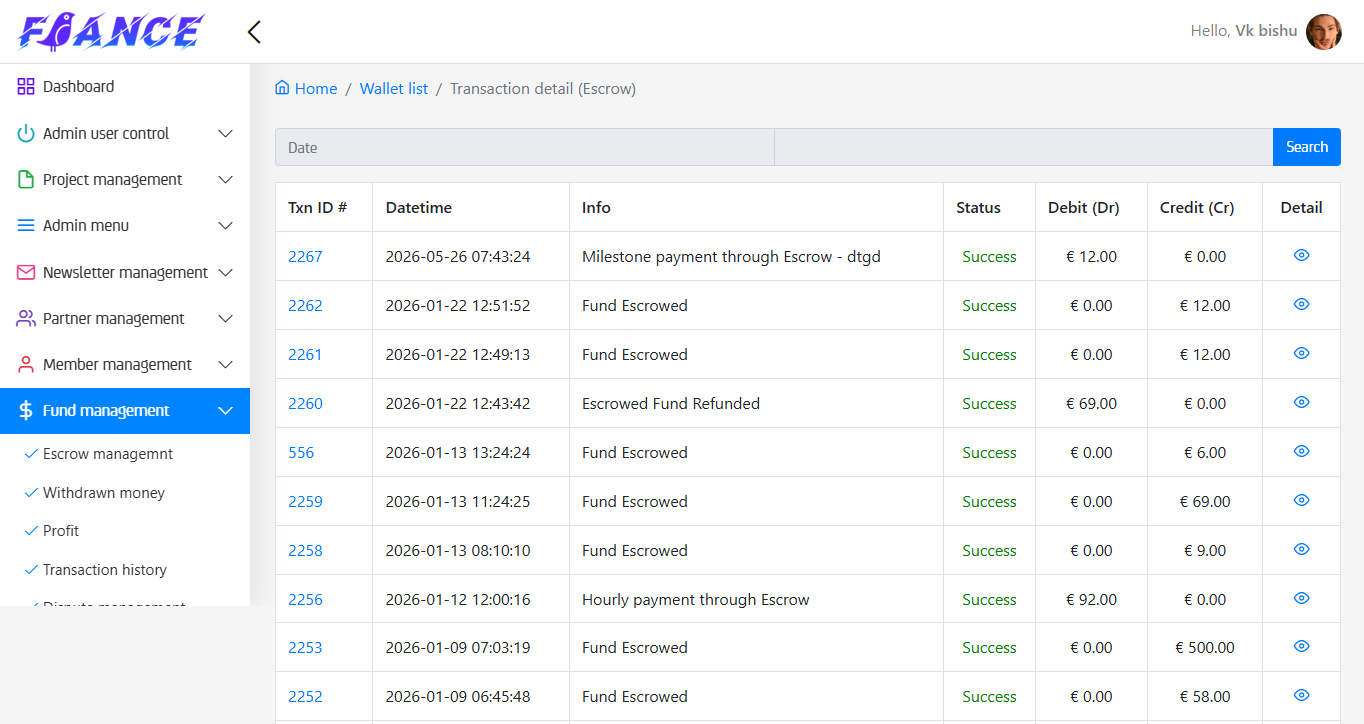
Payment support is one of the easiest things to overestimate when evaluating a marketplace platform. Something can look polished in a demo and still fall apart the moment you need it to handle a specific payout rule or milestone release.
Ask directly whether it handles client payments, freelancer payouts, commissions, refunds, milestone releases, and disputes, and whether it connects to a provider that operates where your users are. Ask what happens when a payment fails or a payout needs to be pulled back. If nobody can answer clearly, that is your answer.
Mistakes That Show Up Later, Not Immediately
Copying Upwork's payment system because it is Upwork is a mistake founders make constantly. Upwork built that system for millions of transactions and a dedicated dispute team you probably do not have yet.
Other patterns to watch for: picking a provider before mapping the workflow, ignoring which countries your users live in until someone cannot get paid, and leaving refund rules vague. The one that bites hardest is skipping tests for the bad cases. A failed payment or a disputed payout is exactly where gaps show up, usually with a real user watching.
More Blog: Freelance Business Opportunities: Find Market Gaps Beyond Upwork
Quick Answers to Common Questions
Do freelance marketplaces need escrow payments?
Not always. It matters most for large or complex transactions between strangers. For small, simple jobs, a plainer setup usually works fine.
How does escrow work in a freelance marketplace?
The client pays upfront, but the money is held rather than sent straight to the freelancer. Once the work is approved, the funds are released, depending on your provider and jurisdiction.
What is the difference between escrow and milestone payments?
Milestones split a project into stages with separate payments for each. Escrow holds the money until conditions are met. Plenty of platforms combine both.
Can a freelance marketplace operate without escrow?
Yes. Upfront payment, payment after delivery, or milestones without a formal escrow layer all work, depending on your users and how much risk sits in each transaction.
Does escrow prevent payment disputes?
No. It controls where the money sits, not whether people agree. You still need a real dispute process, separate from how the payment itself is structured.
Who pays the fees for marketplace payment processing?
It varies. Some platforms fold processing fees into their commission. Others pass some of it to the client or freelancer. Factor payout fees and currency conversion into your economics early.
What should I look for in freelance marketplace software with payment support?
Confirm it handles payments, payouts, commissions, refunds, milestones, and disputes, and connects to a provider covering your users' countries. Get specific answers, not a features list.
Before You Build: What Every Marketplace Founder Should Consider
Escrow builds trust and cuts real risk, but it will not settle a disagreement on its own.
Pairing escrow with milestones tends to work best on bigger, longer projects, because it matches how those projects actually unfold.
Small transactions rarely need a heavy payment setup. Starting simple and adding structure once demand justifies it is a reasonable way to build.
Payment providers cover different countries and charge differently. Check availability before committing to one.
Figure out your payment workflow before shopping for marketplace software, not after. The software should fit what you need.
How you handle payments is part of how much people trust your platform. Getting it right early saves headaches later and gives users a reason to come back.


