Category:
Freelance Marketplace
Why Freelance Marketplaces Need Escrow and Dispute Resolution
By Asim Patra on Sep 21 2026
Summary
Escrow holds the money, but it does not settle disagreements. This guide explains how escrow and dispute resolution work together in a freelance marketplace, using practical examples such as scope creep and partial delivery. It also covers evidence, fair process design, and the practical features founders should plan for well before their first dispute arrives.
A practical look at protecting payments, handling conflicts, and building trust between clients and freelancers.
A client funds a $1,000 milestone. The freelancer delivers. Then the client writes back: "This isn't what I expected." Nobody has committed fraud, and yet the money is stuck in the middle of an argument.
That moment separates a working freelance marketplace from a payment gateway with profiles. When two independent people transact on your platform, holding money safely is only half the job. The other half is deciding what happens when they disagree.
This article treats escrow and dispute resolution as one connected system. We won't explain escrow from scratch, because our earlier piece on whether a freelance marketplace needs escrow payments already does that. Here we look at what happens after the money is held, and what a founder should design before the first dispute arrives.
Why Escrow Alone Is Not Enough for a Freelance Marketplace
Escrow answers one question: where is the money while the transaction is in progress? The client has paid, the freelancer can see the funds, and neither side can quietly walk away with them. That is genuinely useful.
Dispute resolution answers a different one: what happens when the two parties disagree about the transaction? Someone has to decide whether the money goes to the freelancer, back to the client, or gets split. Without a defined process, that someone becomes your support inbox, and every decision is made under pressure with whatever screenshots people send.
So escrow protects the money. Dispute resolution protects the transaction. One does not solve the other, and a marketplace with escrow but no dispute path is really just a very secure place to store an argument.
What Happens When a Client and Freelancer Disagree?
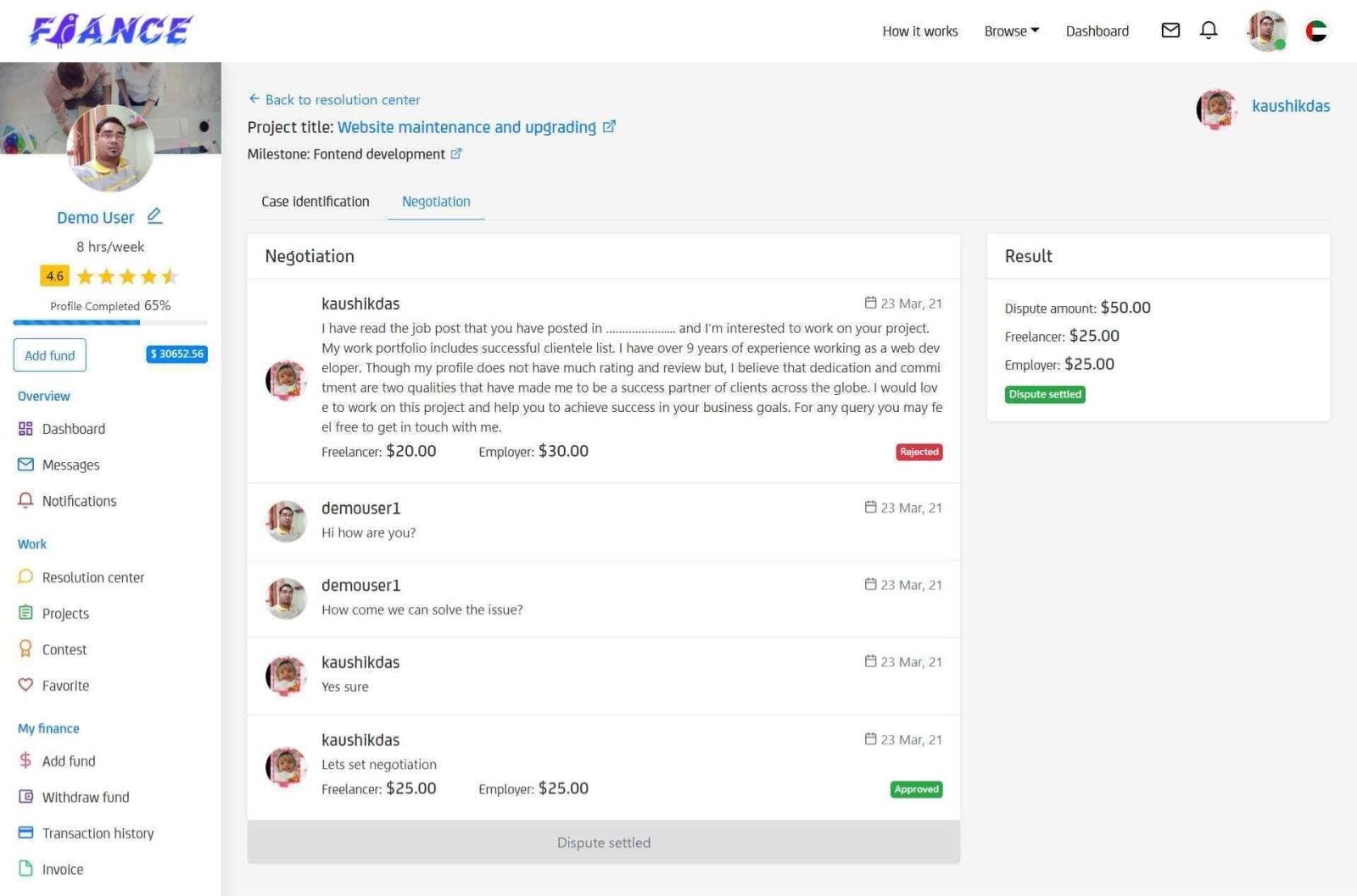
Go back to that $1,000 milestone for a landing page. The freelancer submits on time. The client asks for a full refund and says only that the work is "not good enough."
The marketplace now needs a few things on record: what the milestone promised, when the work was submitted, whether the client asked for changes earlier, and what was said in the chat. If the milestone read "one landing page, mobile responsive, two revision rounds," the review is fairly simple. If it read "design a good website," nobody can decide anything, including your admin.
While this is sorted out, the money stays where it is. Both sides get a fair chance to respond. That is what separates a dispute from a fight.
How Escrow and Dispute Resolution Work Together
Here is a normal transaction:
Client funds milestone → funds are held → freelancer submits work → client reviews → payment is released.
And here is the same transaction when someone disagrees:
Dispute is raised → funds stay held under marketplace rules → evidence is collected → both parties respond → admin review or mediation → outcome (release, refund, or a split).
Treat this as a model to adapt, not a rulebook. Upwork's fixed-price process is a useful reference. Funds are deposited before work starts, and they release automatically if the client neither approves nor requests changes within 14 days of submission. Its disputes team gives a nonbinding recommendation first, and either side can then choose binding arbitration by a neutral third party. Fiverr goes another way, with a Resolution Center where the freelancer can, for instance, offer a partial refund.
Your marketplace does not need a 30-day arbitration route for $20 logo jobs. It does need some route.
Common Disputes in Freelance Marketplaces
Scope creep. A freelancer agrees to build a five-page website for $1,500. After delivery, the client asks for ten more pages, a booking integration and three redesigns, then refuses to approve the milestone. The freelancer feels held hostage. The client feels they have no finished site. Both are reacting to one gap: the scope was never locked. Revision limits, change requests that create a new priced milestone, and communication kept on the platform close that gap.
Partial delivery. A freelancer takes a $900 app milestone, finishes six of ten screens, then gets pulled onto another project. Should the milestone be paid in part, split in two, or refunded? Any of these can work, but only if the milestone listed its deliverables in countable pieces.
The abuse concern. Freelancers in communities like r/Upwork have posted threads alleging that clients use disputes to avoid paying for finished work. These are individual accounts. We cannot verify them, and they don't tell us how common it is. Still, Upwork's own dispute guide admits that some people found the process confusing or even unfair, so the worry is worth taking seriously.
The useful question for a founder is a design question: how do you protect a legitimate client without letting a vague complaint freeze a freelancer's payment? Upwork says its team reviews scope, dates, proof of delivery and messages, and does not rule on subjective quality feedback that has no documented scope behind it. That is one reasonable stance. Yours might differ, but pick one on purpose.
What Should Happen to the Money During a Dispute?
There is no single right answer. Some approaches you could consider:
- Hold everything until resolved. Simple and neutral, but the freelancer waits.
- Release the undisputed part. Fairer when only some deliverables are questioned.
- Deadline-based defaults. Upwork, for example, returns funds to the client if a freelancer does not respond to a refund request within seven days, and gives freelancers seven calendar days to file a dispute on a milestone that was not released.
- Short response windows. On Fiverr, a freelancer has up to 48 hours to accept or decline a cancellation or dispute request.
Whatever you choose, publish it. Silence from either party has to lead somewhere.
What Evidence Should Clients and Freelancers Be Able to Submit?
Reviewers need to connect three things: what was agreed, what was delivered, and when. So your dispute form should accept the agreed scope, milestone requirements, messages, files, delivery records, revision requests and any approvals.
Upwork's guide lists similar items, such as dated change requests, delivery timestamps and annotated screenshots. The design lesson is bigger than the list, though. Evidence that already lives inside your marketplace is far stronger than a screenshot from WhatsApp. If chat, files and approvals stay on the platform with timestamps, your admin is not guessing.
How to Design a Fair Dispute Resolution Process
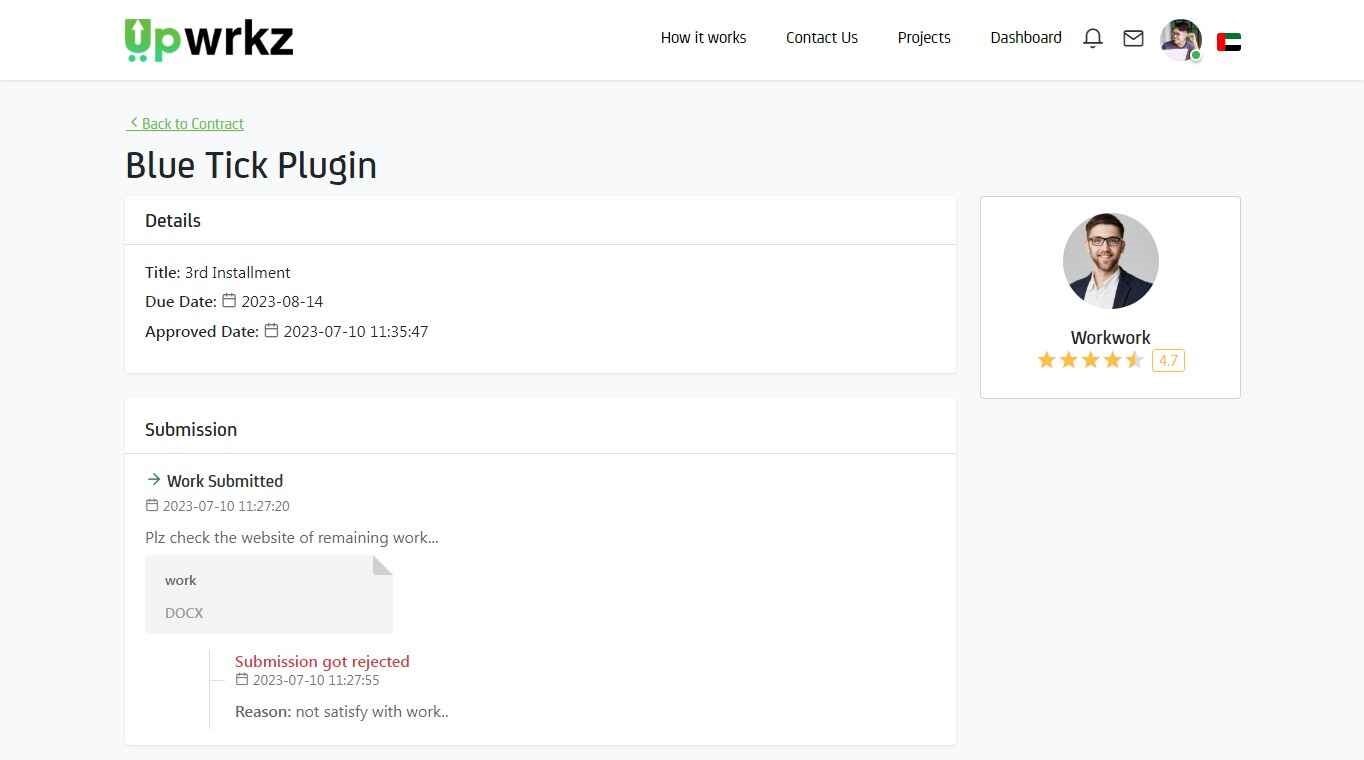
Fairness is mostly boring. Write clear rules before disputes happen, and set deadlines both sides can see. Ask for specific reasons instead of "not satisfied." Show each party the other side's response.
Then think in layers. Most disputes should end in direct negotiation. Some need admin review, where someone compares the evidence to the written scope. A few may justify mediation or arbitration, especially on high-value projects, because an outside party's neutrality can carry weight that your own team's does not.
Finally, keep an audit trail. If a freelancer or client challenges an outcome, you should be able to show what was submitted, when, and by whom.
Marketplace Features That Support Escrow and Dispute Management
Start with the transaction itself: funded milestones with detailed descriptions and clear release rules. These give every dispute a reference point.
Next, the dispute layer. That means a simple way to open a case, deadlines, evidence upload, status tracking and notifications, so nobody is left wondering. Partial refunds and partial payments matter because most real disputes are not all-or-nothing.
Behind that, the admin side needs a review queue, internal notes, escalation options and audit history. Add clear terms and policies on top so users know the rules before they sign up. Each group exists for one reason: to reduce guesswork.
How Better Dispute Resolution Builds Marketplace Trust
A client is more likely to post a bigger project if a bad outcome can be corrected. A freelancer is more likely to take on a new client if finished work will be paid. Both behaviours lead to repeat transactions, which is what a marketplace runs on.
There is an operational upside too. Clear scope and evidence rules cut down on the disputes that reach your admin at all, and a structured process keeps refund handling predictable. It also makes bad-faith behaviour, from either side, easier to spot.
A marketplace can process payments perfectly and still feel unfair if disputes are handled badly. Users often judge a marketplace by how it handled the bad day, not the good ones.
Final Thoughts
Escrow keeps the money safe while work happens. Dispute resolution decides what happens when people disagree. A founder needs both, and needs to design them together: scoped milestones, evidence on the platform, visible deadlines, and a path from negotiation to review.
If you are planning a freelance marketplace, think beyond profiles, job posting, search and payments. Milestones, disputes, refunds and admin controls deserve the same attention. Our Upwork clone script is one example of freelance marketplace software built around that workflow.
Planning a freelance marketplace? Explore the demo to see how the workflow can work before making a development decision. You can also check the pricing details or contact our team with questions about your own marketplace model.


